


What I Look for in a Longevity Supplement: My Conversation with Lucas Aoun on Boost Your Biology
Keeper Health cofounder Angus Macintosh joined Lucas Aoun on Boost Your Biology to talk longevity supplements, NAD+, tauri...

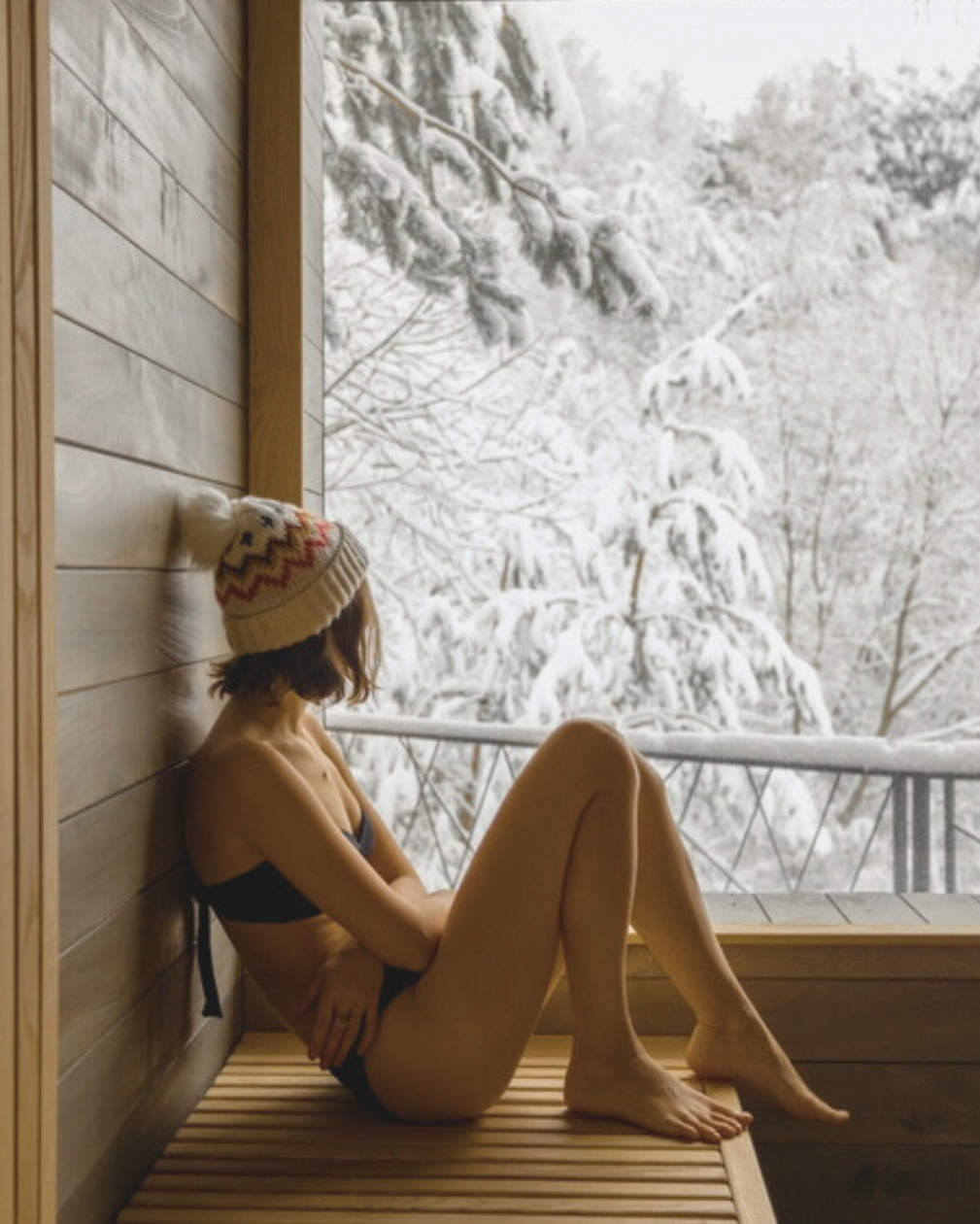
Ice Baths vs Saunas: Which Wins for Longevity?
Your social media feed is probably full of ice bath warriors and sauna evangelists, each claiming their method is the ultimate longevity hack. Wim Hof disciples swear by cold exposure, while Finnish sauna enthusiasts point to decades of research on heat therapy. So which extreme actually delivers better results for healthy aging? The answer might surprise you.
NMN vs NAD+: The Science Behind the Hype
Let's get straight to the point about NMN and NAD+ supplements – what they actually do, why your body can't absorb NAD+ directly, and how to choose the right longevity supplement for your needs.
PQQ vs CoQ10: The Mitochondrial Power Duo
You've probably heard of CoQ10 – it's been the darling of the supplement world for decades. But there's a newcomer that's got longevity researchers excited: PQQ. While most people debate which one is "better," the real question is why you'd choose between them when they work together like a perfectly orchestrated team.

I owned an ice bath for around two years. I used it consistently, often three or four times a week, because I believed the discomfort was worth pushing through for the potential health and longevity benefits.
Eventually, I sold it on Facebook Marketplace. Not because I think cold exposure has no benefits. I still think it has a place. I simply reached the point where I wasn't convinced the benefits of maintaining and regularly using an ice bath outweighed the cost, effort and additional stress it was placing on my body.
My sauna, on the other hand, isn't going anywhere. That experience changed the way I think about a lot of longevity practices. We're often encouraged to keep adding interventions: train harder, fast longer, get colder, get hotter. But every intervention is another input the body has to deal with.
Sometimes, more isn't better. So if I had to choose between an ice bath and a sauna today, I'd choose the sauna. Here's why.
If longevity is the goal, I think the evidence currently favours sauna.
There's some interesting research around cold water immersion, and there are situations where I think cold exposure can be useful. But the long term evidence isn't comparable to what we currently have for traditional sauna use.
There's another factor that matters to me just as much: consistency.
A longevity practice only has value if it fits into your life well enough that you'll actually continue doing it. I enjoy sauna. I can use it consistently. And I feel good afterwards. My experience with ice baths was very different.
One reason both heat and cold exposure have attracted so much attention in longevity is hormesis.
Hormetic stress is essentially a controlled stressor that can prompt the body to adapt. Exercise is probably the most familiar example. Training temporarily stresses the body, and with adequate recovery, the body adapts.
Heat and cold exposure can also act as physiological stressors. But there's an important part of that equation that I think sometimes gets lost in the wellness conversation: Your body still has to recover from the stress.
An ice bath doesn't exist independently of everything else happening in your life. How much are you training? How well are you sleeping? What's your workload like? How old are you? How well are you recovering? There may also be individual differences in how people respond to thermal stress.
Stack intense training, work stress, poor sleep, fasting, sauna and aggressive cold exposure together and, at some point, I think you have to ask whether adding another stressor is actually helping. I believe you can do too much in the pursuit of longevity.
For about two years, I pushed through regular ice baths because I thought the potential benefits justified the discomfort.
And I could certainly feel an immediate effect. I'd get out feeling incredibly alert and energised. For the next ten minutes or so, I felt great. But eventually I started questioning what I was actually trying to achieve.
Maintaining an ice bath at home takes effort. It's another piece of equipment to clean and maintain, another protocol to fit into your week and, frankly, another uncomfortable thing you have to convince yourself to do. More importantly, I started looking at how I personally felt while using it consistently.
When I was ice bathing three or four times a week, I noticed I seemed to be getting sick far more frequently. Since removing regular ice baths from my routine, my personal experience has been that my immune resilience and overall recovery are better.
To be clear: that's my experience, not scientific evidence that regular ice baths impair immune function.
There were other variables in my life and training, and my personal experience can't establish cause and effect. But I also don't think we should ignore our own data simply because it isn't a clinical trial.
The published research helps inform the decisions I make. My own response helps tell me whether those decisions are working for me. In this case, mine was telling me something.
This is where I think it's important to separate the popularity of cold exposure from the strength of the evidence.
Cold water immersion has been studied for a range of outcomes, particularly exercise recovery, stress and wellbeing. But when we're specifically talking about longevity, the evidence is still relatively limited.
A 2025 systematic review and meta analysis looked at 11 studies involving more than 3,000 healthy adults exposed to cold water at 15°C or below. The results were interesting, but mixed.
The researchers found a reduction in stress at one particular time point following cold water immersion and some promising findings around sleep and quality of life. But they found no significant immediate effects on immune function, while inflammatory markers actually increased immediately after cold exposure, consistent with cold acting as an acute physiological stressor.
The researchers ultimately concluded that more high quality research is needed to understand the longer term effects and optimal cold water immersion protocols.
That's not evidence that cold exposure is bad for you. But I also don't think it's evidence that everyone pursuing longevity needs an ice bath in their backyard.
This is another area where my thinking has changed. Cold exposure and ice baths have almost become synonymous, but they don't need to be.
There's a tendency in the longevity and biohacking world to assume that if something is uncomfortable, making it more uncomfortable must produce a greater benefit. I don't think we can make that assumption.
Cold exposure exists on a spectrum. The recent systematic review of cold water immersion included interventions ranging from around 7°C to 15°C, with very different exposure durations.
So the physiological response to cold clearly isn't something that only begins when you're sitting in near freezing water. Different temperatures and protocols may also be appropriate depending on what you're actually trying to achieve.
I still use cold exposure selectively. I've just stopped believing I need a freezing plunge sitting at home waiting for me several times a week for it to "count". Harder doesn't automatically mean better.
Sauna is different for me for two reasons.
The first is the evidence. Some of the most interesting long term research comes from Finland. One well known prospective study followed more than 2,300 middle aged Finnish men for a median of around 20 years.
More frequent sauna bathing was associated with lower risks of sudden cardiac death, fatal cardiovascular disease and all cause mortality. It's important to be precise about what that tells us.
This was observational research, so it doesn't prove that sauna itself caused those reductions in mortality. The population was also middle aged Finnish men, so we shouldn't automatically assume identical effects across every population.
But compared with the long term evidence we currently have around ice baths and longevity, I find it much more compelling.
The second reason is far less scientific: I actually enjoy doing it. And I think that matters more than people sometimes acknowledge.
There's an important caveat to my own sauna routine.
Much of the long term cardiovascular and mortality research people refer to when talking about sauna comes from traditional Finnish sauna bathing, rather than the infrared sauna I personally use.
Traditional saunas typically operate at considerably higher ambient temperatures. Infrared saunas heat the body differently and generally operate at lower air temperatures.
So I don't think we should simply take every finding from traditional Finnish sauna research and assume an infrared sauna provides an identical effect.
There is research exploring physiological responses to different forms of heat exposure, including heat shock responses, but this is an area where I'd like to see considerably more research.
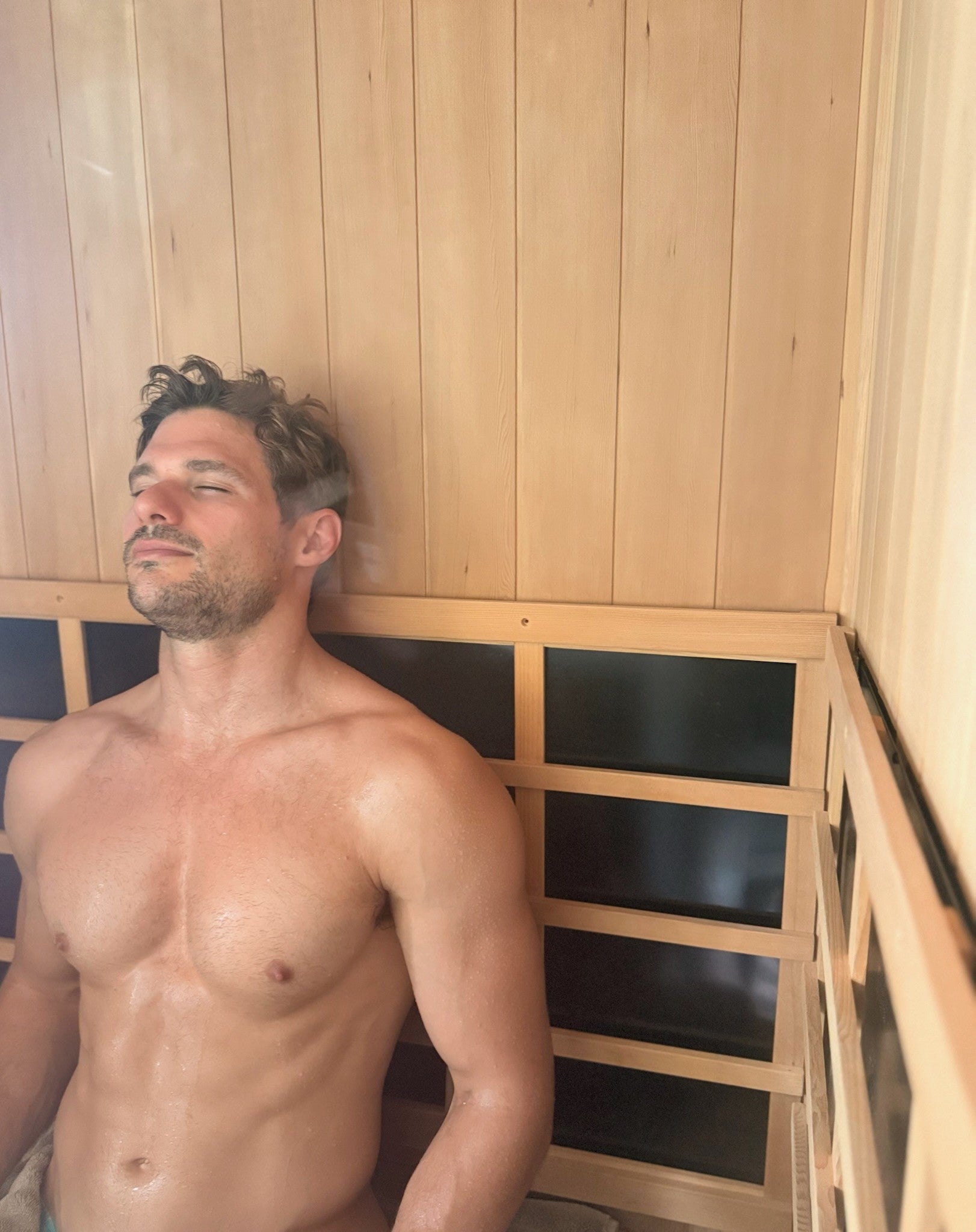
Personally, I've experimented with longer and more intense sauna sessions and found that pushing myself too hard is counterproductive. If I've trained hard and then hammer myself in the sauna, I can end up exhausted for the rest of the day. More importantly, I notice it can affect how well I train afterwards. That's not what I'm trying to achieve.
Through trial and error, I've found that around 20 to 25 minutes in my infrared sauna works well for me. I get meaningful heat exposure and enjoy the session without feeling like I've tipped myself over the edge. Again, that's my personal experience, not a protocol I'm prescribing for everybody else.
This is probably the biggest lesson I've taken from experimenting with both heat and cold.
The longevity world can make looking after yourself feel like a full time job. Strength training. Zone 2. VO2 max work. Fasting. Sauna. Cold exposure. Supplements. Sleep optimisation. Biomarker testing.
Individually, many of these things can have a place. But you can't necessarily take every intervention that has some evidence behind it, stack them together at maximum intensity and assume the result will be better health.
Training is already stress. A hard sauna session is another stress. Cold exposure is another stress. Then add work, family, inadequate sleep and everything else going on in normal life.
At some point, recovery has to be part of the longevity conversation too. That's why I'm increasingly less interested in how many protocols I can fit into my day and more interested in identifying the ones that give me the greatest return without compromising everything else.

There's also a much simpler reason I stopped combining sauna with an ice bath.
I started dreading the ice bath. I'd be sitting in the sauna, something I genuinely enjoyed, knowing that I had freezing water waiting for me afterwards. Eventually, I realised the ice bath was starting to negatively affect my experience of the sauna. That's important.
If attaching an ice bath to the end of every sauna session makes you less enthusiastic about using your sauna in the first place, you've potentially allowed one wellness intervention to undermine another habit that you actually enjoy and can maintain.
I've written before about why consistency and systems tend to beat willpower when it comes to health goals, and I think the same principle applies here.
You could argue that forcing yourself into freezing water builds mental fortitude. Maybe it does. But there are plenty of difficult things in life. I don't think every health practice needs to become another test of how much discomfort you can tolerate.
If I had to choose one today, I'd choose sauna.
The long term evidence is more compelling to me, I enjoy doing it, and perhaps most importantly, it's something I can realistically see myself doing consistently for decades.
That doesn't make ice baths useless. Cold water immersion has some interesting research behind it, and it may make sense for particular people, circumstances and goals. Other people may respond to it very differently than I did.
If you love your ice bath, recover well and it fits comfortably into your routine, I'm certainly not going to tell you to sell it on Facebook Marketplace too. But I would question the idea that a longevity practice becomes more effective simply because it's more extreme.
Longevity isn't about winning one brutal morning. It's about building habits you can still be doing years from now.


