


What I Look for in a Longevity Supplement: My Conversation with Lucas Aoun on Boost Your Biology
Keeper Health cofounder Angus Macintosh joined Lucas Aoun on Boost Your Biology to talk longevity supplements, NAD+, tauri...


Ice Baths vs Saunas: Which Wins for Longevity?
Your social media feed is probably full of ice bath warriors and sauna evangelists, each claiming their method is the ultimate longevity hack. Wim Hof disciples swear by cold exposure, while Finnish sauna enthusiasts point to decades of research on heat therapy. So which extreme actually delivers better results for healthy aging? The answer might surprise you.

NMN vs NAD+: The Science Behind the Hype
Let's get straight to the point about NMN and NAD+ supplements – what they actually do, why your body can't absorb NAD+ directly, and how to choose the right longevity supplement for your needs.

PQQ vs CoQ10: The Mitochondrial Power Duo
You've probably heard of CoQ10 – it's been the darling of the supplement world for decades. But there's a newcomer that's got longevity researchers excited: PQQ. While most people debate which one is "better," the real question is why you'd choose between them when they work together like a perfectly orchestrated team.

Updated September 2026
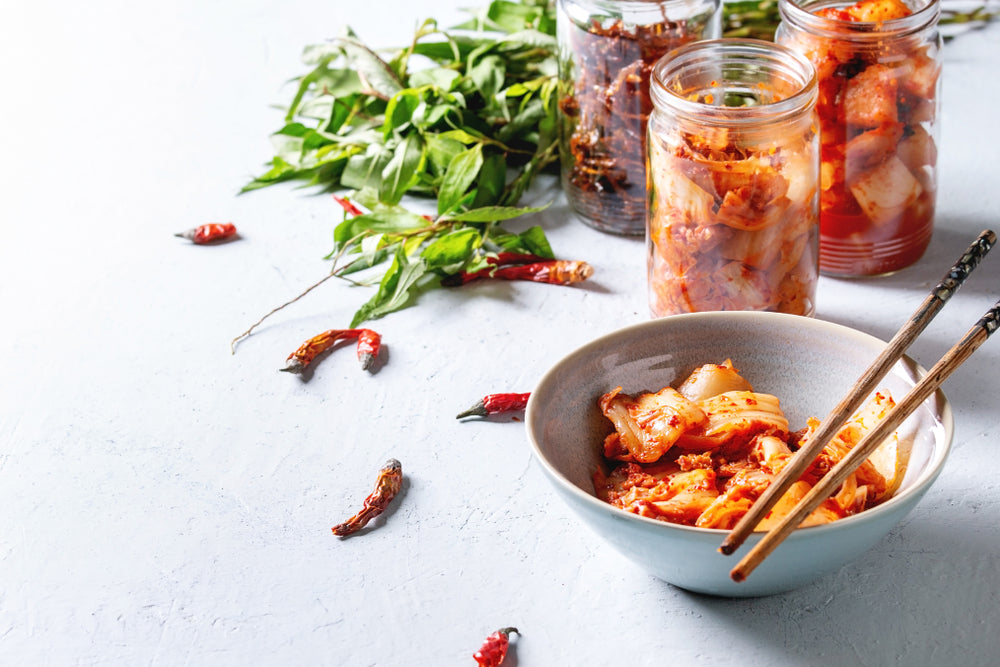
Kimchi is a traditional Korean dish of fermented vegetables, usually napa cabbage and radish with garlic, ginger, chilli and salt. During fermentation, lactic acid bacteria such as Lactobacillus, Leuconostoc and Weissella multiply, which is why kimchi is often discussed alongside gut health. Here's what the evidence actually says.
A 12 week clinical trial. In a 2024 randomised, placebo controlled trial, 90 overweight adults took 3 g of freeze dried kimchi powder in capsules daily for 12 weeks. Both kimchi groups lost significantly more body fat than the placebo group, and their gut bacteria shifted, with more Akkermansia muciniphila and fewer Proteobacteria.1 It's an encouraging result, though it was a single centre study using capsules rather than kimchi as a food.
Population research. A large observational study of more than 115,000 Korean adults found that eating one to three servings of kimchi a day was associated with lower rates of obesity, particularly in men.2 Observational studies show associations, not cause and effect.
Fermented foods more broadly. A Stanford study found that adults who ate more fermented foods for 10 weeks increased their gut microbiome diversity and reduced several markers of inflammation.3
The overall picture. A scoping review of human trials found promising but mixed results, with differences in study size, kimchi type and outcomes measured.4 Kimchi is a nutritious addition to a balanced diet, but it isn't a cure for digestive problems.
Studies have used a wide range, from small daily amounts up to around 200 g a day. For most people, a couple of tablespoons (about 30 g) with a meal is a comfortable starting point, increasing gradually if you enjoy it. Some people notice more wind or bloating at first as they adjust.
Kimchi is one of the better studied fermented foods, with early evidence of benefits for gut bacteria. Choose a refrigerated, naturally fermented kimchi, start small and enjoy it as part of a varied diet. For more on the foundations of gut health, read It's More Than Just a Gut Feeling.
Where Keeper fits: Keeper Good Gut is a daily chocolate gut health powder with colostrum, glutamine, prebiotic fibres and heat treated Akkermansia muciniphila, the same species of bacterium that increased in the kimchi trial above. It's designed to sit alongside fermented foods, not replace them. Every batch is third party tested.
This article is general information only and isn't a substitute for advice from your healthcare professional.


