


What Does a Longevity Stack Really Cost?
What does a longevity stack really cost? We compared Complete Longevity with purchasing its 18 active ingredients individu...


Ice Baths vs Saunas: Which Wins for Longevity?
Your social media feed is probably full of ice bath warriors and sauna evangelists, each claiming their method is the ultimate longevity hack. Wim Hof disciples swear by cold exposure, while Finnish sauna enthusiasts point to decades of research on heat therapy. So which extreme actually delivers better results for healthy aging? The answer might surprise you.

NMN vs NAD+: The Science Behind the Hype
Let's get straight to the point about NMN and NAD+ supplements – what they actually do, why your body can't absorb NAD+ directly, and how to choose the right longevity supplement for your needs.

PQQ vs CoQ10: The Mitochondrial Power Duo
You've probably heard of CoQ10 – it's been the darling of the supplement world for decades. But there's a newcomer that's got longevity researchers excited: PQQ. While most people debate which one is "better," the real question is why you'd choose between them when they work together like a perfectly orchestrated team.

Cleanses and detoxes are everywhere in wellness. Juice cleanses, detox teas, restrictive diets and supplement programs all promise some version of the same thing: helping your body reset.
But do you actually need to detox your body? And what is the difference between a cleanse and a detox in the first place?
The most important thing to understand is that your body is already detoxifying itself every day. Your liver, kidneys, digestive system and lungs are continually processing, transforming and eliminating substances your body no longer needs.
So at Keeper, when we talk about a reset, we are not talking about extreme restriction or trying to somehow flush toxins from your body overnight. We think the more useful question is: how can you support the systems your body already uses every day?
That thinking is also where the name Daily Reset came from.
The terms cleanse and detox are often used interchangeably, but neither refers to one universally defined wellness protocol.
Generally, a cleanse describes a temporary change to what you eat or drink. This might involve juices, whole foods, removing alcohol or certain foods, fasting, or following a restrictive eating program for a set period.
A detox is usually marketed around the idea of helping the body remove unwanted substances.
The problem is that wellness marketing can make it sound as though toxins simply accumulate until we undertake a special detox to remove them. Human physiology is considerably more sophisticated than that.
Your body has systems constantly working to metabolise and eliminate compounds, including substances produced naturally within the body as well as those we're exposed to through food, medications, alcohol and our environment.
A three day juice cleanse doesn't suddenly switch those systems on. They were already working.
Your body is constantly processing and removing substances it doesn't need, with the liver playing a central role. You can think of liver detoxification as a process that happens in stages:
Phase I: Break it down
The liver begins processing substances such as alcohol, medications and other compounds, changing them into forms that can be dealt with more easily.
Phase II: Make it easier to remove
The body then further processes these compounds so they can be safely transported and eliminated. Nutrients from our diet are involved in supporting many of the pathways used during this stage.
Phase III: Move it out
Finally, the processed compounds are transported out of cells and ultimately leave the body, primarily through urine and stool.
In simple terms:
Break it down (I) → prepare it for removal (II) → move it out (III).
And importantly, this isn't something that only happens when you're doing a "detox". These processes are happening in your body every day.
This is also why nutrition matters. Rather than trying to cleanse your body, a varied, nutrient rich diet provides many of the nutrients and plant compounds your body uses to support its normal metabolic and antioxidant processes.
This really depends on what you mean by "work". If a cleanse means taking a few days to stop drinking alcohol, eat more whole foods, drink more water, prioritise sleep and reduce highly processed foods, you may understandably feel better.
But that's very different from claiming that a cleanse has somehow removed accumulated toxins from your body.
Likewise, you don't need an extreme diet, juice fast or restrictive program for your liver and kidneys to begin doing their jobs. They're already doing them.
Personally, I prefer the idea of a reset because it shifts the focus away from punishment and restriction. After periods of travel, late nights, eating out or drinking more alcohol than usual, getting back to the basics can feel incredibly good.
That might simply mean eating well, increasing fibre and whole foods, drinking enough water, moving your body, sleeping properly and reducing alcohol for a period. It doesn't need to be extreme.
There are times when many of us simply don't feel our best. You might feel bloated after travelling, sluggish after a period of eating out, tired after several late nights, or generally run down after a busy few weeks.
It's tempting to interpret those feelings as evidence that your body is full of "toxins". Usually, the explanation is far less dramatic.
Changes to sleep, hydration, alcohol intake, diet, movement, digestion and stress can all influence how we feel from day to day.
Rather than responding with another extreme intervention, I think it's often more useful to return to the habits we know support general health and recovery.
Adequate hydration supports normal kidney function and elimination, while fibre is important for digestive health and regular bowel movements.
Rather than relying on juices alone, focus on a varied diet containing vegetables, fruit, legumes, nuts, seeds and other fibre rich whole foods.

Diet is particularly interesting because researchers have investigated whether certain foods and food derived compounds can influence enzymes involved in biotransformation and antioxidant defence.
Cruciferous vegetables such as broccoli, cauliflower, cabbage and Brussels sprouts are particularly relevant. Broccoli and broccoli sprouts contain glucosinolates that can give rise to compounds including sulforaphane.
Sulforaphane has been extensively studied for its interaction with Nrf2 and Phase II detoxification and antioxidant enzymes. This doesn't mean eating broccoli will "detox" you. It means the nutrients and bioactive compounds in our diet can interact with the biological systems our bodies already use. That's a much more useful way to think about food.
Regular movement supports cardiovascular and metabolic health, circulation, digestion and overall wellbeing. That doesn't mean you need to sweat toxins out of your body.
Walking, strength training, Pilates, yoga and other forms of regular exercise all have benefits without needing to be framed as a detox protocol. Consistency matters far more than trying to punish yourself with an extreme workout because you've had an indulgent weekend.

The same principle applies more broadly to health. Building routines you can actually maintain is often more useful than chasing short term perfection.
Sleep is another fundamental part of feeling and functioning well.
Poor sleep can affect energy, appetite, mood, recovery and metabolic health, which is why a few nights of inadequate sleep can leave you feeling considerably less than your best.
If you're feeling run down, sometimes getting back to a consistent sleep routine is more valuable than adding another wellness protocol.
Supporting your body isn't only about what you add. Sometimes it's about what you temporarily reduce.
For many people that might mean drinking less alcohol, eating fewer ultra processed foods, getting more sleep or simply giving themselves time to recover after a particularly busy period. You don't need to be perfect. The objective is creating habits that are sustainable enough to become part of normal life.
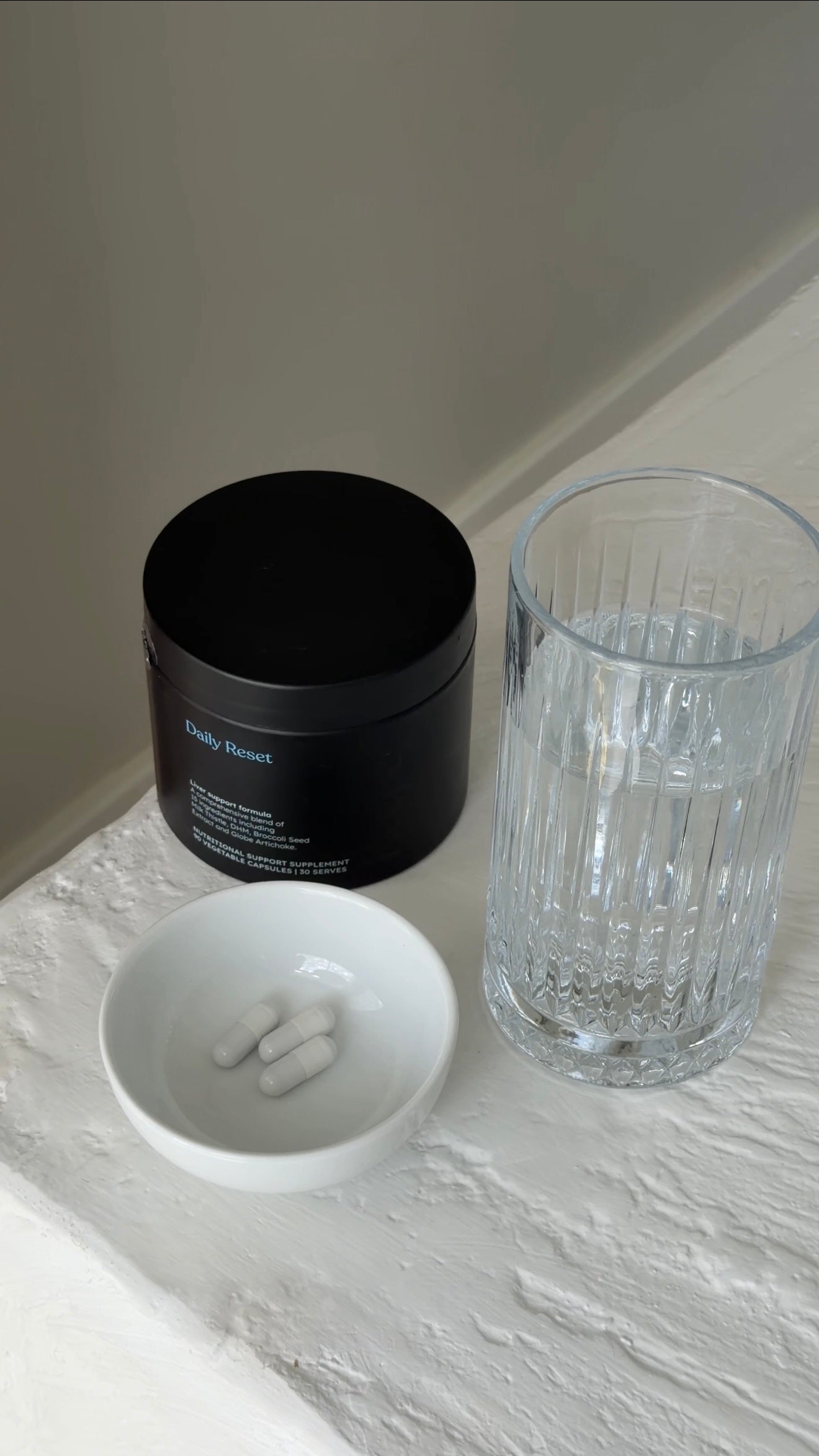
This philosophy is exactly why we called our formula Daily Reset, rather than Daily Detox.
We didn't want to create another product based around the idea that your body needs to be aggressively cleansed. Your body's own systems are already doing that work every day.
Instead, Daily Reset was formulated to provide nutritional support for the body's normal antioxidant, liver and metabolic processes.
For example, it contains broccoli seed extract with glucoraphanin and myrosinase, which are involved in producing sulforaphane, a plant compound that has been widely studied for its interaction with the body's antioxidant and cellular defence pathways.
The formula also combines milk thistle, globe artichoke, taurine, vitamin C, selenium and B vitamins as part of a broader daily formulation.
The idea isn't to detox your body for you. It's to support the systems already doing the work.

I also think it's useful to distinguish detoxification from some of the other natural maintenance processes happening within the body.
For example, autophagy is a cellular recycling process through which cells break down and recycle damaged or unnecessary cellular components.
It is sometimes discussed alongside detoxification in wellness, but they aren't the same biological process.
If you're interested in the cellular side of this topic, we've explored this further in our Journal article Autophagy: Your Body's Cellular Clean Up Crew.
So, cleanse vs detox: which one do you actually need?
Probably neither in the way they're traditionally marketed. Your body doesn't wait for a juice cleanse or detox program to start taking care of itself. Those processes are already happening every day.
What you can do is create an environment that supports normal health and recovery. Eat a varied, nutrient rich diet. Get enough fibre. Drink water. Move regularly. Prioritise sleep. Moderate alcohol. Give yourself time to recover.
And if you've had a particularly busy week, holiday or weekend? You don't need to punish yourself for it. Just reset and get back to the basics.


